
Jump To a Topic
Are you looking for clarity on No Contact Orders or Cafcass recommendations? This guide will help you understand their purpose and how they impact legal and family matter. You’ll learn what a No Contact Order is, when it’s issued, and what conditions that apply. We’ll also explore the role of Cafcass in family court, particularly when recommending or advising on contact arrangements. Whether you’re involved in a domestic dispute, seeking custody, or concerned about child welfare, this guide covers essential information to navigate these legal processes. Get insights into the circumstances that trigger No Contact Orders, how Cafcass prioritizes child safety, and the process for requesting or challenging these orders in court. Stay informed and empowered as you understand your legal options.
What is a No Contact Order?
A No Contact Order is a legal directive, issued by the police or court, that prohibits the accused to contacting (e.g., spouse or children). No contact orders can be temporary or permanent, depending on the circumstances.In Ireland, a no contact order is also used to protect individuals in cases of domestic violence. CAFASS safeguarding letters help the court understand risks to children and provide guidance on contact arrangements.
The order of no contact may be used to prevent harm when there is a history of abuse. To get a no contact order, evidence must be provided to show the need for protection. A non-contact order can be issued in cases of family disputes, abuse, or neglect. Reasons to stop child contact UK include threats to the child’s safety or emotional well-being. No contact orders for children may be made to protect them from harmful contact with a parent. To get a no contact order, the applicant must file for it in court, providing evidence of the risk. CAFASS is often involved in child welfare cases, providing recommendations on contact arrangement
Key Points to Note:
- It remains effective until the case is resolved or the sentence is served.
- Conditions may change at any stage of the criminal process.
When is it Enforced?
- If police release the accused without bail, they may impose a no-contact condition.
- If the court grants bail, the order often remains in effect until sentencing or acquittal.
- In custody, the court may prohibit the accused from contacting specific individuals.
Victim’s Concerns and Input
Victims can express their concerns or request specific contact arrangements through victim services. These include:
- Contact via third parties for essential arrangements (e.g., child custody).
- Permission for limited contact from a bail supervisor or probation officer.
- The court is the sole authority for modifying or removing these conditions.
When is a No Contact Order Issued?
A No Contact Order is typically issued in cases involving:
- Victim as a Witness: To prevent interference with evidence.
- Violence or Threats: When the accused poses a danger.
- Victim’s Concerns: If the victim expresses valid fears about contact.
What is a No Contact Order in Family Court UK?
- No Contact Orders protect children from harm or distress in the UK.
- Issued in family disputes or cases of domestic violence.
- Prevents harmful contact, ensuring safety and well-being of individuals involve
- No Contact Order rules UK specify conditions for restricting contact.
- cafcass section 7 recommends no contact reports often guide courts in determining whether a no contact order is necessary.
Common Conditions of No Contact Orders
- No Contact with the Victim: Includes direct or indirect communication (e.g., messages, calls, or intermediaries).
- No Contact Under Influence: Prevents contact while under the influence of drugs or alcohol.
- Through a Third Party: For necessary child custody arrangements.
- With Written Permission: Only allowed with approval from relevant authorities.
- Restricted Locations: Prohibits approaching the victim’s home or workplace.
Cafcass Recommendations: no contact order between parent and child
When Does Cafcass Recommend No Contact or cafcass recommend indirect contact? Cafcass prioritizes the child’s safety and emotional well-being in all decisions.No contact is recommended if contact negatively affects the child’s welfare or safety.How to get a no contact order for child?
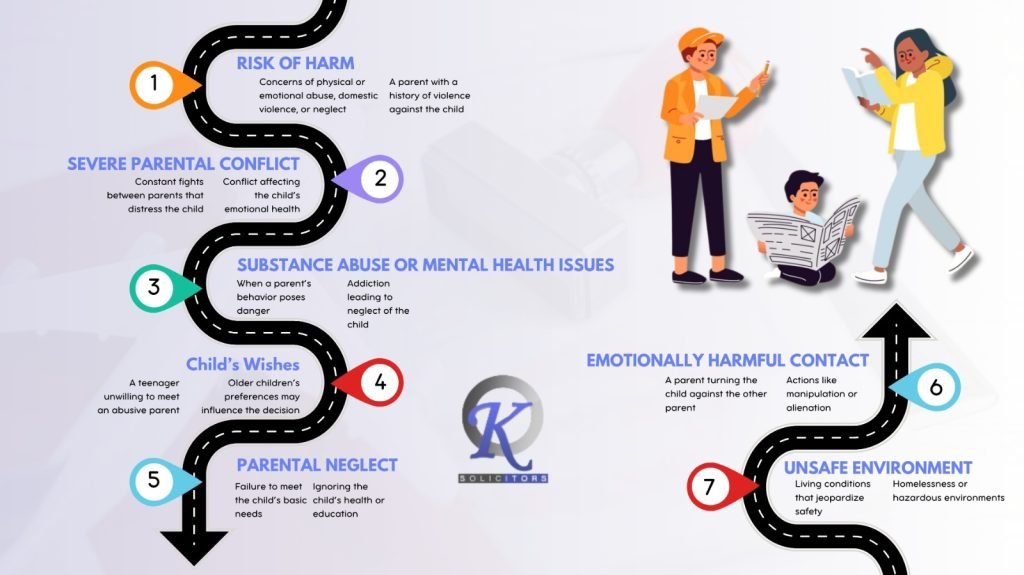
Here are the main No Contact Order Domestic Violence reasons Cafcass may suggest no contact:
| Reason for No Contact Order | Description | Example |
| Risk of Harm | ➥Concerns of physical or emotional abuse, domestic violence, or neglect | ➥A parent with a history of violence against the child |
| Severe Parental Conflict | ➥Conflict affecting the child’s emotional health | ➥Constant fights between parents that distress the child |
| Substance Abuse or Mental Health Issues | ➥When a parent’s behavior poses danger | ➥Addiction leading to neglect of the child |
| Child’s Wishes | ➥Older children’s preferences may impact the decision | ➥A teenager unwilling to meet an abusive parent |
| Parental Neglect | ➥Fail to meet the child’s basic needs | ➥Ignoring the child’s health or education |
| Emotionally Harmful Contact | ➥Actions like manipulation or alienation | ➥A parent turning the child against the other parent |
| ➥Living conditions that jeopardize safety | ➥Homelessness or hazardous environments |
Valid Reasons to Stop Child Contact in Family Court UK
In family court cases, a no contact order may be issued to prevent harm to the child. Some of the valid reasons include:
- Physical or emotional abuse by the parent.
- Domestic violence or threats towards the child.
- A parent’s abuse affecting the child’s well-being.
- Severe emotional distress caused by contact.
- Parent’s inability to provide proper care or meet basic needs.
- Conflict between parents affecting the child’s mental health.
Conclusion
A No Contact Order in family court prohibits direct or indirect contact between individuals, often issued to protect from harm. It is commonly used in cases of domestic violence or child protection. Reasons for a no contact order include potential threats of harm, whether physical, emotional, or psychological. In the UK, it is issued in cases of abuse, harassment, or domestic violence to prevent further harm. Reasons to stop child contact involve concerns for a child’s safety, emotional well-being, or parental neglect.A contact order outlines specific arrangements for child-parent contact. A no contact order can be requested if one party is seen as a danger to the child.
A lifetime no contact order is typically issued in severe cases where long-term protection is needed. Court orders for no contact are designed to keep individuals safe from harm. A no contact order between parents may be made when one parent poses a risk to the other or the child. To apply for a no contact order, individuals must present evidence of potential harm, often in family court.
While CAFASS does not have the authority to stop contact, its recommendations heavily influence court decisions. No contact order rules No contact order rules are fixed and are enforced to grantee the safety of the both parties involved. If there are issues about domestic violence, the court may issue a no contact order to protect the victim.Reasons for a no contact order may include history of violence or threats, harassment, or stalking.
Frequently Asked Questions(FAQs)
What is an Indirect Contact Order?
A restriction that Prohibits contact through indirect means, like Intercessors. For example: Imagine that a parent, under a No Contact Order, is not allowed to directly communicate with their ex-partner due to a history of abuse.Court may impose an Indirect Contact Order, which means the parent can still send messages or arrange visits through a third party, like a lawyer or a family member. The third party would be the intermediary, conveying information or facilitating contact, but the abusive parent is not allowed to make direct contact themselves. This ensures that the child’s safety is maintained while still allowing necessary communication.
What is a Lifetime No Contact Order?
A Lifetime No Contact Order might be issued in a case where an individual has been repeatedly bad behavior, and the court determines that the victim is at ongoing risk of harm. So, if a person having previous record of violent behavior and there are fears of future harm from them, the court may impose a Lifetime No Contact Order, permanently barring the offender from contacting the victim.
How does a No Contact Order different from a Restraining Order?
A No Contact Order might be issued in a criminal case to prohibited a person from contacting their victim, while a Restraining Order is used in civil cases to protect someone from harassment or any harm, such as in a workplace setting.
What does “no contact through a third party” mean?
A parent may be allowed to communicate with their child only through a counselor or a legal representative, not directly or through other people.
Can Cafcass stop contact?
Cafcass cannot stop contact directly, but it can recommend restrictions if it believes contact would harm the child, like in cases of abuse.
What is a CAFCASS No-Contact Recommendation? How Can Parents Cope with No Contact Recommendation?
Cafcass recommend no contact between a child and a parent if there is a risk to the child’s well being. However Parents can seek counseling, ask some ques to understand the reasoning behind the decision, and respect the child’s wishes during the process.
Long-Term Effects of No Contact Recommendations: For parents, it may lead to isolation or emotional strain. For children, it could result in anxiety or difficulty trusting others.
How Old a Child Be to Heard by CAFCASS?
A 12-year-old child might directly express their wishes to the court through CAFCASS, while a younger child’s views would be gathered through a social worker.
What is CAFCASS?
CAFCASS is an organization that works to ensure children’s welfare is prioritized in family courts, such as by advising whether contact with a parent should be limited due to safety concerns. The court may not always follow Cafcass’s recommendation. For instance, a judge may decide that contact should be allowed if other factors suggest it’s safe for the child.
How to Maintain No Contact with Co-Parent?
Parents can maintain no contact by using a neutral third-party service to exchange information about the child’s needs or schedule.
What if a parent disagrees with the recommendation?
If a parent disagrees with a CAFCASS recommendation, they can challenge it in court, where a judge will make the final decision based on the child’s best interests.