
Jump to section
Most students are still searching for the FLR visa for students in 2025 without realising it has become outdated. The terminology causes confusion: what many refer to as an “FLR visa” isn’t a visa route at all.
Here’s the issue. Many resources continue to push FLR as a way to buy time in the UK. That advice is not only outdated. It can lead to refusals, harm future applications, and even put students at risk of removal.
FLR isn’t a visa; it’s the label on several in-country application forms (for example, family or private life, or certain human-rights routes). Students can use those routes if they meet the rules, but FLR is not a way to buy time.
FLR forms still exist and students can submit them. But they are not for extending student status or buying time. If you apply without proper grounds like serious medical reasons, you will be refused. That refusal damages your immigration record.
In this article, we aim to clarify the confusion. You will see what has changed, when FLR might still apply in exceptional cases, and what the alternatives are for students who require more time or wish to progress after their studies.
Key Takeaways
- FLR is not a visa route. It’s a set of in-country application forms for specific routes like family or human rights claims.
- For course extensions, use the Student route with a new CAS from your university.
- After graduation, the Graduate Visa gives you 2 years of stay (3 years for PhD holders).
- If you have a job offer from a licensed sponsor, apply for the Skilled Worker Visa before your Student permission expires.
- FLR only applies in rare medical cases where treatment is not available in your home country. The evidence threshold is extremely high.
- Applying for FLR to buy time leads to refusal, damages your immigration record, and can risk removal from the UK.
- Apply through the correct route early while your current permission is still valid.
What This Means for Current Students
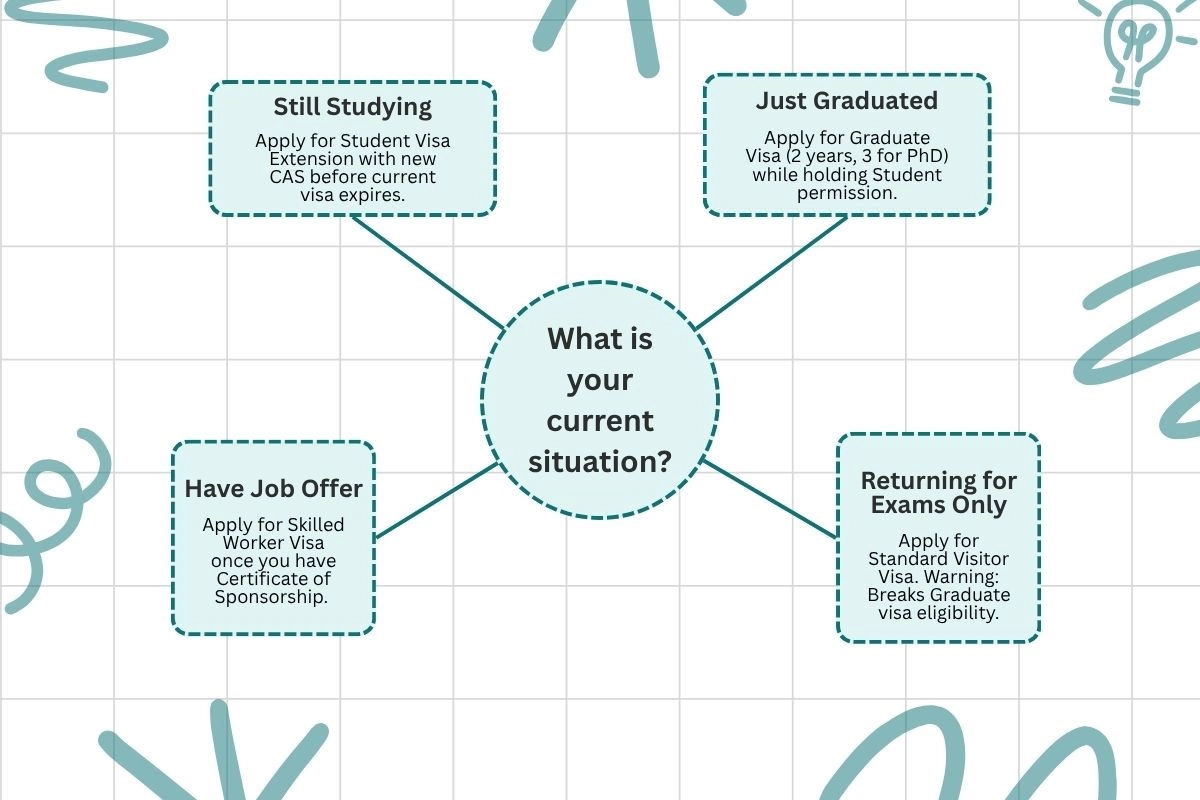
If you are already in the UK on a student visa, the changes mean your next step depends entirely on where you are in your academic journey. Let’s break it down by situation.
Because FLR is a set of in-country forms for specific routes rather than a study extension, the focus should be on the Student route to get more time on your course, and after completion, on the Graduate route or Skilled Worker, where the rules fit.
For Course Extensions
If your studies are running longer than expected, the correct route is usually a student visa extension with a new CAS.
This applies whether you are finishing the same qualification or moving on to a higher level of study. The process is straightforward on paper, but it does require a new CAS from your university and payment of the visa fee and Immigration Health Surcharge. If you have been in the UK for 12 months or more on the application date, you meet the financial requirement automatically and do not need to show funds; if under 12 months, you must evidence funds under Appendix Finance.
From what I have seen, many students leave this request too late and end up under pressure, so starting early makes a huge difference. The most common delay is students waiting too long to get their CAS issued, so the earlier you prepare, the smoother your application will be.
Note: If you only need to return to sit exams without attending classes, your university may ask you to apply under the Standard Visitor route for that exam period. Be aware that holding a Visitor visa usually breaks eligibility for the Graduate route, because you must have, or have last held, Student permission at the date of your Graduate visa application (Appendix Graduate GR 1.3 and GR 4.3). You also cannot switch from a Visitor visa to a Student visa within the UK. Policies differ between universities, so check with your institution as early as possible.
For Graduation
If you are completing your degree and want to stay in the UK, the Graduate Visa is the main option. It grants two years of stay for most degrees, and three years if you have completed a PhD or other doctoral qualification. Work is broadly unrestricted, except for work as a professional athlete or coach.
For students unsure of their next step, this route provides valuable breathing space before deciding on a longer-term plan. Many graduates use this time to gain experience, build professional connections, and prepare for the transition into the Skilled Worker Visa. Employers often use this period as a trial phase before offering sponsorship, which can make the switch easier later.
From our experience, three things usually decide whether you qualify for the Graduate Visa. You must have successfully completed your course, your university must have reported that completion to the Home Office, and you must hold or have last held Student permission at the time of your application.
Pro Tip: Apply before your Student visa expires to keep things simple. While the Rules can overlook short delays in limited cases, it’s never wise to rely on that. We sometimes notice a brief reporting delay from universities, especially if there has been an earlier FLR or other in-country application, so it’s worth confirming that your completion has been reported before submitting your Graduate visa application.
For Work Opportunities
If you already have a job offer from a licensed sponsor, the Skilled Worker Visa is the most direct route after your studies. To qualify, your role must appear on the eligible occupations list and meet the required salary threshold. Your employer will issue a Certificate of Sponsorship, and you will then apply from within the UK before your Student permission expires.
Unlike the Graduate Visa, the Skilled Worker route ties you to one employer, but it also provides a pathway to settlement after five years of continuous lawful residence. Many graduates choose this option when their career plan is already secure and their employer is ready to sponsor them.
We regularly meet people who try to bridge to sponsorship with FLR or a fee waiver while waiting for a Certificate of Sponsorship, and it almost always backfires. Refusals are common and people end up without lawful stay.
From our casework: The issues usually start on the employer’s side, such as using the wrong SOC code, setting the salary below the threshold, or choosing a CoS start date that does not align with visa timing. These details matter, but they are outside the student’s control. The best approach for a student is to work closely with their employer and apply once the Certificate of Sponsorship is ready, rather than filing a holding FLR application.
Critical Warnings About FLR Applications
One mistake still catches many students out: using FLR as a way to buy time. On the surface, it might look like a quick fix if your visa is close to expiring and you are unsure about your next step.
In reality, it is one of the fastest ways to get refused. Applications made without a proper legal basis are likely to be rejected under the Rules. That refusal stays on your immigration record and can affect the outcome of future applications.
If you then overstay, enforcement action may follow, including removal, which can make returning to the UK far more difficult later. From experience, the students who apply for FLR just to stay a little longer often spend more money and face more stress than those who apply through the correct visa route from the start.
FLR forms are in-country applications and must be submitted before your current permission expires. The Rules include a very limited 14-day exception in certain refusal, invalidity, or expiry situations, but this applies only in specific circumstances. You should not rely on it unless you are certain it applies to you.
Many students still find outdated advice online suggesting FLR as a simple way to extend their stay. Much of that information predates the 2023 and 2025 policy changes, and following it now can create serious problems.
If you apply for FLR when you do not qualify, you risk losing hundreds of pounds in fees, wasting time, and damaging your immigration history. Worse still, some students end up overstaying while waiting for a decision, which can make future UK visa applications much harder.
Filing FLR to buy time almost always causes more harm than good. We often see cases where biometrics are missed or the application basis is too weak, leading to refusal and loss of Student permission. Once that happens, eligibility for the Graduate route is usually lost. The better approach is to choose the correct visa route early and apply while your existing permission is still valid.
The bottom line is simple. Understanding how the current rules work helps you avoid refusals and focus on the visa routes that are still open to you. The right planning now keeps your stay in the UK secure and your future options protected.
When FLR Might Still Apply (Limited Scenarios)
Although FLR is no longer a realistic option for most students, there are a few rare cases where it may still be considered. These are not standard routes, and the evidence required is extremely demanding.
Serious Medical Conditions
This is the one scenario where FLR still has relevance. It applies only if you have a serious medical condition that cannot be treated in your home country.
If you are receiving treatment in the UK for a serious medical condition and suitable care is not realistically available or accessible in your home country, an FLR-type route may still be possible under human-rights provisions. The threshold is very high. You will need robust medical evidence explaining the condition and treatment plan, plus material showing why appropriate care in your home country is not realistically available or accessible.
We have seen both outcomes. In one case, the application succeeded because the evidence included UK specialist reports, a detailed treatment plan, and official confirmation that equivalent care was not available in the home country. In another, it failed because the condition was routine and the evidence did not prove unavailability of treatment back home. In practice, the outcome depends entirely on the quality of the evidence and the seriousness of the condition.
Other Exceptional Circumstances
Beyond medical grounds, FLR is rarely granted. There may be rare humanitarian situations, such as when a student cannot safely return to their country due to sudden conflict or natural disaster. These are assessed on a case-by-case basis and require extensive supporting evidence. Even then, the Home Office tends to push applicants toward other more suitable routes if they exist.
Getting Professional Help
The rules around visas shift often, and with FLR now restricted to such narrow cases, the risk of making the wrong move is higher than before. That is why professional advice can make a difference. An immigration specialist can look at your exact situation, explain which options are realistic, and guide you through the process without wasting time or money. From what I have seen, students who get advice early avoid the stress of refusals and are far more confident about their applications.
At KQ Solicitors, We focus on giving students and graduates practical guidance. We offer a free one-to-one consultation where you can discuss your case directly with a solicitor, not a call centre. You will have ongoing contact with your lawyer, and in most cases you can expect a response within 24 hours. Our team is led by SRA-regulated lawyers with more than 15 years of experience. We also contribute to reforestation projects by donating £5 for every case we take on. If you need help, you can reach us at 01582 966180.
Conclusion
FLR is no longer the option many students think it is. What was once seen as a way to stay longer in the UK is now a fast route to refusal and future visa problems.
If your studies are continuing, the right step is a student visa extension with a new CAS. If you are graduating, the Graduate Visa gives you time to work, plan your next move, and gain UK experience. If you already have a job offer, the Skilled Worker Visa is your route to long-term settlement.
FLR only remains relevant in rare and serious situations, such as medical cases or humanitarian grounds, and even then, the evidence threshold is extremely high.
The best results come from planning early and choosing the correct visa for your situation. That decision protects your record, saves unnecessary costs, and keeps your options in the UK open for the future.
Disclaimer: It is general information, not legal advice. For personalized advice on your specific situation, contact our immigration specialists.